
What Walking in Pu Luong Is Actually Like Underfoot
Pu Luong walking is not one uniform surface. On the walks we operate you move between village paths, working terraces, valley tracks and forest trails — often in the same day. This note is about what you feel underfoot, not how hard the day is rated.
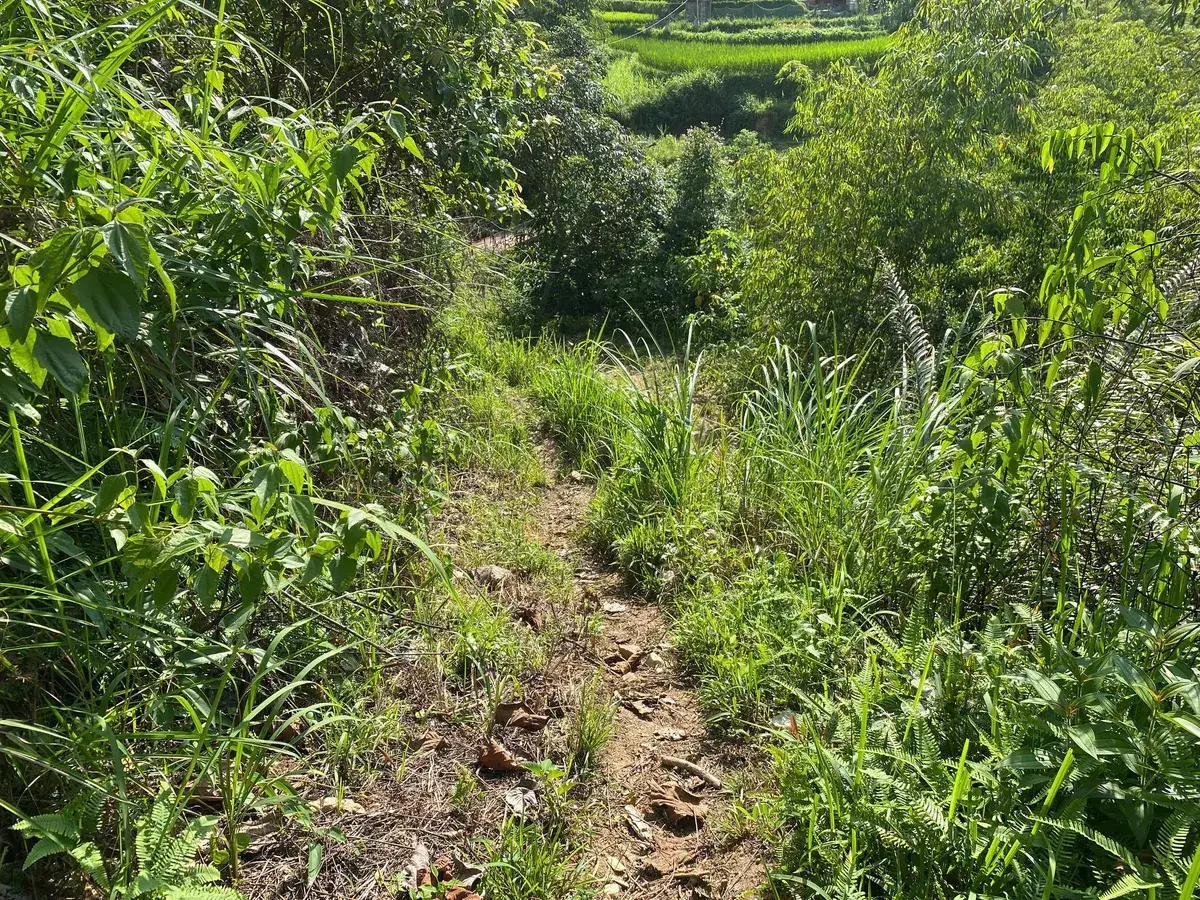
What are Pu Luong trails like in practice?
Most walking is on unpaved or partly paved countryside paths: compacted earth, stone steps in places, narrow tracks between fields, and forest paths with roots and leaf litter. You are rarely on a long, smooth sidewalk; you are on paths that farmers, villagers and walkers already use.
Not every walk uses every surface. The route confirmed for your departure decides which sections you see. A half-day on village paths feels different from a forest-heavy day — compare programmes when you know your time and pace.
Village paths and terrace edges
Village approaches are often narrow — sometimes only one person wide — with uneven stone or earth underfoot. Terrace paths follow the shape of the fields: short ups and downs, occasional muddy patches after rain, and edges where you need to watch your footing even when the view is open.
These are working landscapes. Surfaces can be dusty when dry and slick when wet. The guide may slow the group where the path pinches or where farmers are moving through the same corridor.
Forest floor and valley tracks
Forest sections add roots, loose leaves, rock and occasional stream crossings. Shade keeps some paths damp longer than open terrace routes. Valley tracks may be wider but still uneven — ruts, loose gravel or packed mud depending on recent weather.
Forest sound and shade change how the day feels, but they do not automatically make a walk “technical.” Grade and pace still come from the programme you book and how conditions read on the day.
After rain and mud
Rain changes grip more than it changes the map. Light rain may simply mean slower, more careful steps on the same path. Heavier rain can turn compacted earth into sticky mud or make stone steps slippery.
When conditions are unsafe, the guide may adjust the walking plan — reroute, pause, or stop for the day. That operational decision is separate from this surface note; see our weather-on-the-trail guidance for how rain affects departures.
Are all walks the same underfoot?
No. The five private walks on this site differ in time on the trail, forest share, and grade — not in a single “standard Pu Luong path.” Two Easy programmes can still feel different if one stays mostly on village and terrace paths and another spends more time in forest.
If your decision is about effort or fitness, use the difficulty note and the programme pages. If your decision is about shoes and footing, use the packing note once you know your programme.
What this means for footwear
Closed shoes with grip matter more than fashion trainers. You want something you can trust on mud, loose earth and occasional wet rock — not sandals or smooth-soled city shoes.
We do not publish a mandatory boot brand. Match your shoe to the programme grade and the season you travel; ask us to confirm the expected surfaces for your departure if you are unsure.
Surfaces vary by route and day — match a walk to your time and grade next.